
Implementation
Purpose
Develop and communicate a plan for putting the decision into practice ethically and effectively.
Key Concepts
An ethical decision means little if it is not carried out ethically. Implementation includes communication, support for affected stakeholders, and alignment with the values behind the decision.
This step turns principle into practice. Ethical implementation builds trust and helps ensure your decision has the intended impact.
In Practice
Example Scenario
At NexaTech, the leadership team communicates the hybrid model plan via all-staff meetings, an internal video message from the CEO, and a public press release. Affected employees are offered new roles, upskilling opportunities, or transition support. A 3-month rollout plan is created with feedback checkpoints. Leadership appoints an internal implementation team to ensure consistency and accountability.
Tips and Tools
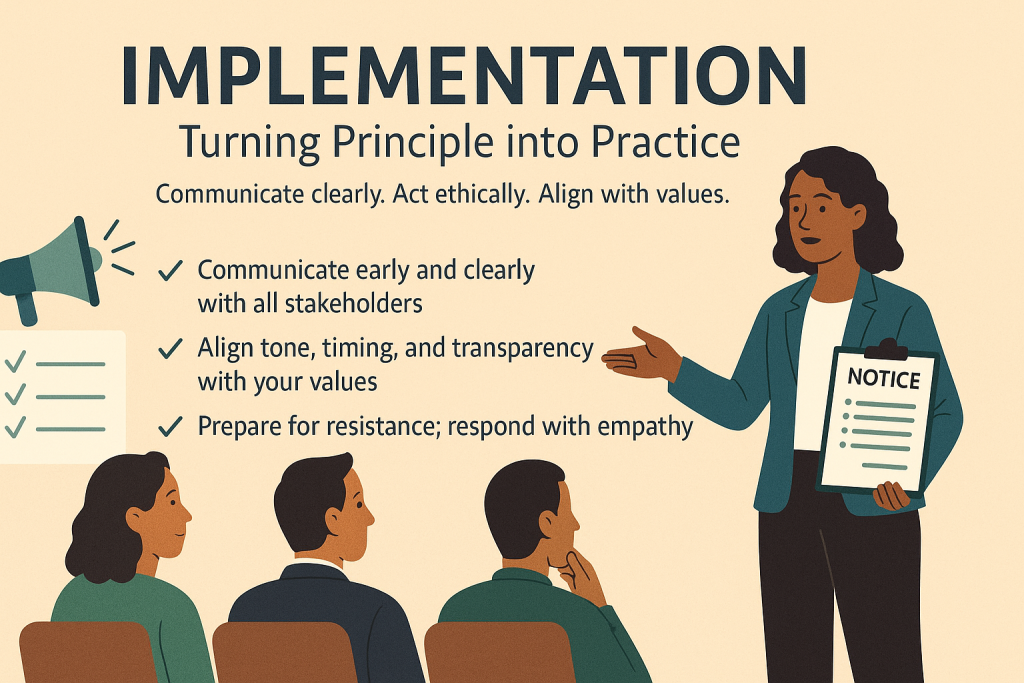
- Communicate clearly and early with all stakeholders.
- Align tone, timing, and transparency with the values behind your decision.
- Plan for resistance or emotional responses; ethics also involves empathy.
Wrapping Up This Part
You’ve made and implemented your ethical choice. Now it’s time to reflect on the results and learn for next time.
When you’re ready, continue to the next part of the process.
Proceed to: Monitor & Feedback →
